


Puppy Visits, Dog Walks, or Drop-In Visits? Here's How to Choose

If you've started researching pet care and found yourself wondering what actually separates a "dog walk" from a "drop-in visit" — you're not alone. These terms get used loosely across the industry, and most pet parents don't know there's a real difference until they've booked the wrong one. Here's a clear breakdown of what each service actually includes, who it's for, and how we approach all three at Pawsh Pet auPairs.

Puppy Visits
Puppy visits are built specifically for puppies under 6 months old, and they run 20 minutes each.
At this age, a puppy's bladder and their nervous system are both still developing — which means the goal isn't a long outing, it's frequency. Most of our puppy clients book 2–3 visits a day, aiming to get their puppy outside every 2–3 hours. That consistency is what actually drives successful housebreaking; a puppy who's taken out on a predictable schedule learns the routine far faster than one who's left to hold it for six or eight hours at a stretch.
But a puppy visit isn't just a potty break. We build in enrichment — short games and activities designed to help a young dog develop attention span and start learning to self-soothe and regulate their nervous system. Those are skills that pay off well beyond puppyhood; a puppy who learns early how to settle and self-regulate tends to grow into a calmer, more confident adult dog.
Best for: Puppies under 6 months old, especially during active housebreaking.
Dog Walks
Dog walks are 30 or 60 minutes and take place out in your neighborhood — this is the service most people picture when they think "dog walker."

The way we approach a walk is a little different from a brisk loop around the block, though. We let the dog set the pace. That means real time to sniff, explore, and actually take in their environment, rather than being rushed from point A to point B. Scent exploration isn't just a nice-to-have — it's one of the most effective forms of mental stimulation available to a dog, and a walk that includes it tends to leave a dog calmer and more satisfied than one that's purely about mileage.
We also build in enrichment beyond the walking itself: time to sit and dog-watch (and people-watch), games that encourage appropriate play, and activities that engage a dog's mind as much as their body. The result is a dog who comes home not just tired, but genuinely settled.
Best for: Dogs who need regular exercise, mental stimulation, and time outdoors while their people are at work or away for the day.
Drop-In Visits
Drop-in visits are also offered in 30- or 60-minute windows, but the focus is different from a walk. A drop-in is built around getting your dog outside to potty, providing companionship, and working through enrichment games and activities — without a full neighborhood walk.
Drop-ins are also how we care for cat clients. For cats, that means fresh food, clean litter, and real one-on-one companionship — someone who notices if something seems off, not just a fly-by refill.
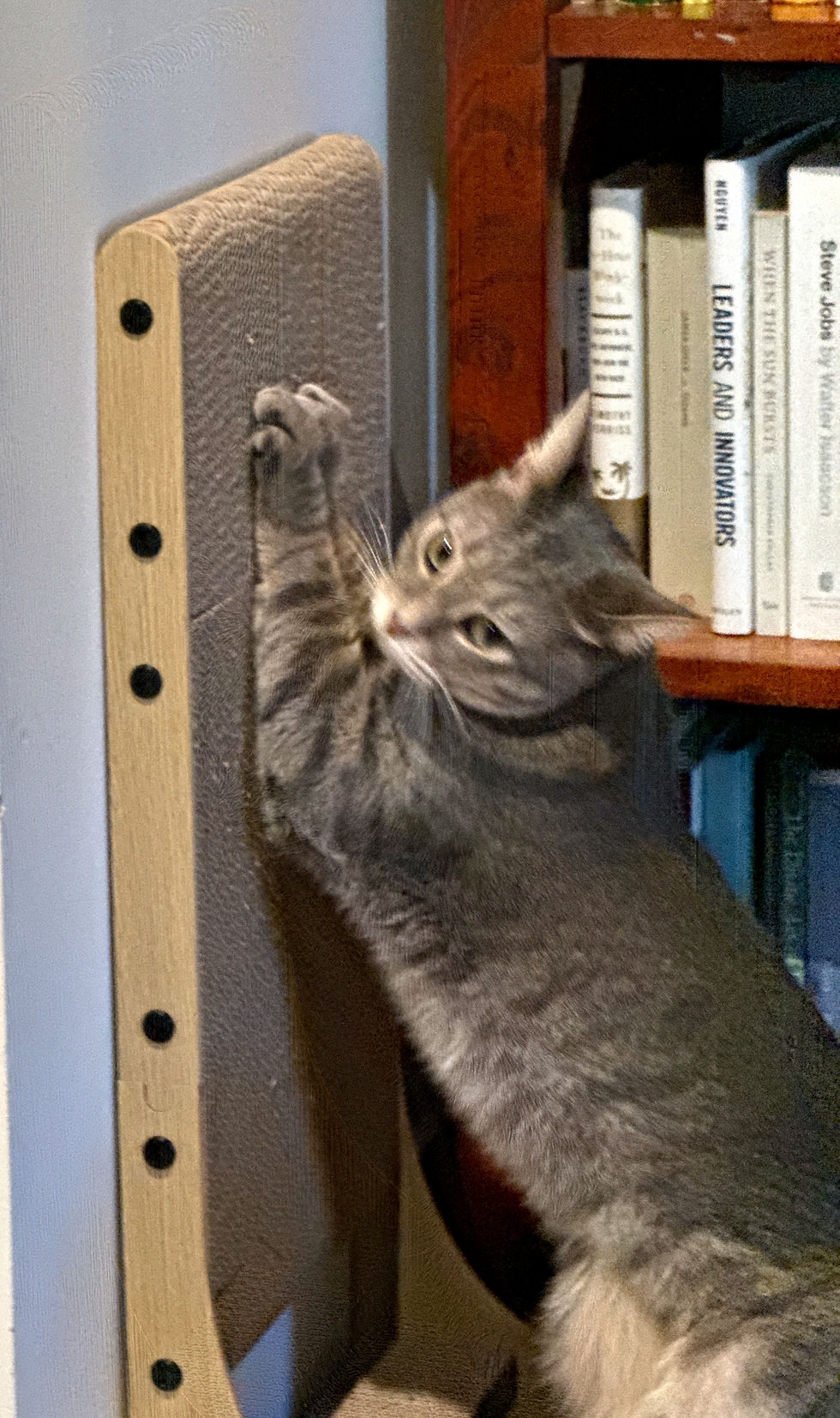
Best for: Dogs who need a midday check-in and potty break but not necessarily a full walk, and any cat client who needs care while their family is away.
The Pawsh Pet auPairs Difference
However you choose to mix and match these three services, here's what stays consistent across all of them:
Single-household visits, always. Your dog (or cat) gets our full attention — never mixed in with a group of dogs from other clients.
A consistent, small team. You'll get to know the 1–2 walkers or sitters assigned to your pet, not a rotating cast of strangers. That consistency means your walker actually knows your dog's routine, quirks, and body language over time.
A meet-and-greet before service ever starts. Your walker learns your pet's routine, triggers, and preferences up front — nothing is learned on the fly during the first paid visit.
Body language, not just behavior. Our team is trained to read what your pet is actually communicating — comfort, stress, excitement, fatigue — and adjust the visit accordingly, rather than running through a fixed script every time.
Enrichment built into every visit type, not offered as an upsell. Whether it's a puppy learning to self-regulate, a dog sniffing their way down the block, or a cat getting real companionship during a drop-in, mental engagement is part of the standard service.
A detailed recap after every single visit. You'll get a photo, a report on your dog's behavior, and a note on which enrichment games were played — plus the basics: potty habits, fresh water, and food. No wondering, no radio silence.
Insured, bonded, and background-checked. Every member of our team is vetted before they ever meet your pet.
Reliable backup coverage, still within your same small team. If your regular walker is out, your pet is covered by someone they already know — never a total stranger.
Which One Is Right for Your Pet?
If you're still not sure which service fits, here's the short version: puppies need frequency, adult dogs benefit from a real walk with room to explore, and drop-ins are the right call when your pet just needs a check-in, a potty break, or companionship without a full outing. And if you have a multi-pet household — a puppy and a cat, say — it's common to mix services to match what each pet actually needs.
Have questions about which schedule makes sense for your pet? Reach out and we'll help you figure out the right fit.


Comments